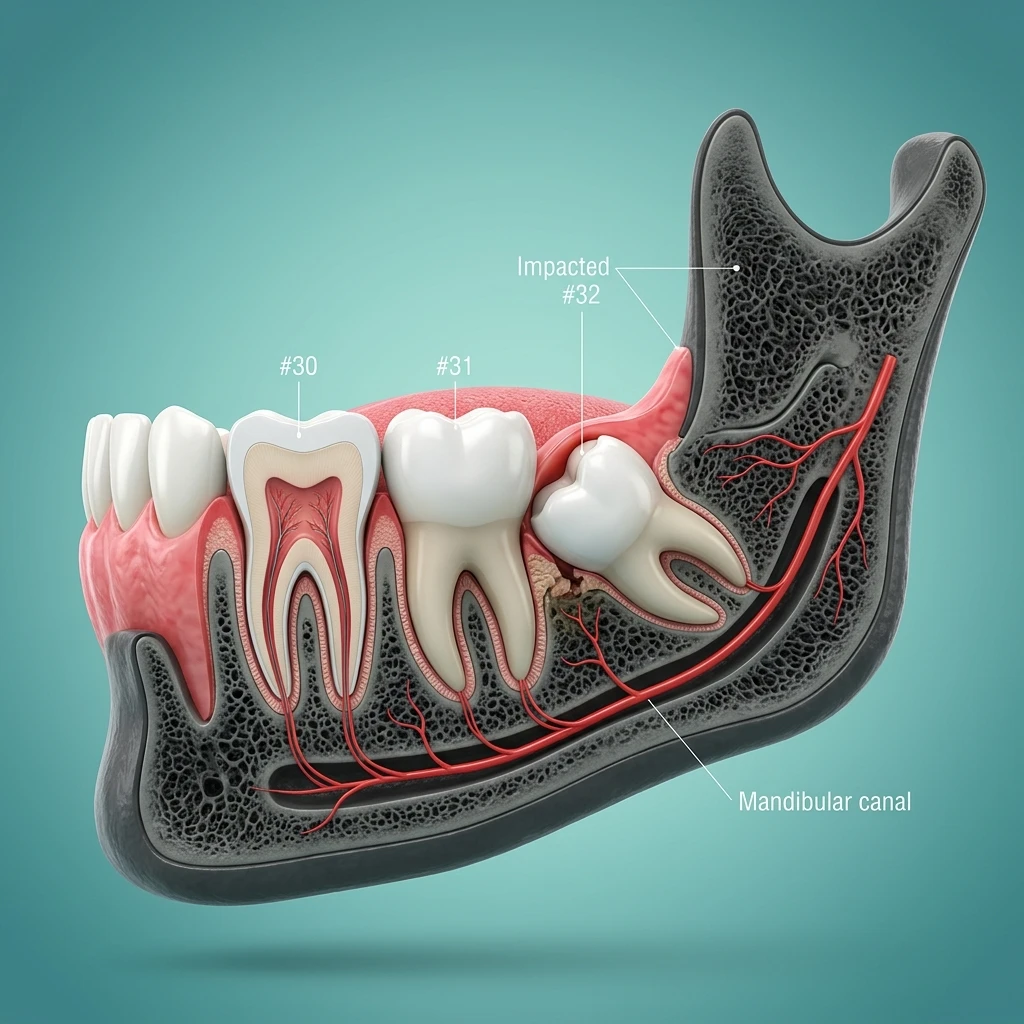
Why Do Wisdom Teeth Cause Problems?
Wisdom teeth — your third molars — are the last teeth to erupt, typically appearing in your late teens or twenties. For many people, they cause no problems at all. But for millions of others, they're a source of pain, infection, and complications that often requires extraction.
The reason is evolutionary: our ancestors had larger jaws that accommodated thirty-two teeth comfortably. Modern humans, however, have smaller jaws — most of us simply don't have enough space for all four wisdom teeth to erupt properly.
When there's not enough room, wisdom teeth can become "impacted," meaning they get stuck or grow at an angle. This can lead to crowding, infection, cysts, damage to neighbouring teeth, and significant pain. If you're in Gudivada and experiencing persistent jaw pain, especially in the back of your mouth, wisdom teeth might be the culprit.
Recognizing Wisdom Tooth Symptoms
Not all wisdom tooth problems announce themselves loudly. Some develop gradually, while others come on suddenly. Here are the key symptoms to watch for:
Pain and Discomfort
The most obvious sign is pain in the back of your mouth, jaw, or even extending to your ear. This pain can range from mild and intermittent to severe and constant. You might notice it's worse when eating or chewing.
Swelling and Redness
When a wisdom tooth is partially erupted or infected, the gum around it often becomes swollen, red, and tender. This is caused by inflammation and bacterial colonization of the area.
Difficulty Opening Your Mouth
Some people with impacted wisdom teeth experience trismus — difficulty opening the mouth fully or limited jaw movement. This can make eating and speaking uncomfortable.
Infection Signs
If a wisdom tooth becomes infected, you might notice bad breath, pus or discharge from the site, or even a fever. These are signs that the infection is active and needs immediate attention from a dentist in Gudivada or Krishna district.
Damage to Nearby Teeth
Wisdom teeth that grow at an angle can press against and damage the second molar next to them. You might experience pain in that tooth or notice it's becoming loose.
Cavity Formation
Impacted or partially erupted wisdom teeth are harder to clean properly, making them susceptible to decay. You might develop cavities that cause sensitivity or pain.
Jaw Stiffness
Swelling deep in the jaw can cause stiffness and reduced mobility, making it difficult to enjoy normal activities.
Types of Wisdom Tooth Impaction
Impaction is classified based on how the tooth is positioned relative to the jawbone and neighbouring teeth. Understanding the type can help you grasp why extraction might be recommended:
Mesial Impaction
The tooth is angled forward, toward the front of the mouth. This is the most common type and is often the most likely to cause problems with the neighbouring molar.
Distal Impaction
The tooth is angled backward, away from the front. This is the least common type and usually causes fewer problems than other types.
Vertical Impaction
The tooth is growing straight down but is trapped beneath the gum and bone. It's completely stuck and has no room to erupt naturally.
Horizontal Impaction
The tooth is lying on its side, completely horizontal within the jawbone. This is the most severe form and typically requires surgical extraction.
At Krishna Dental in Gudivada, we use digital imaging to determine the exact position of your impacted teeth and recommend the most appropriate treatment.
When to Seek Help: If you're experiencing pain around your wisdom teeth that lasts more than a few days, or if you notice signs of infection (swelling, pus, fever), don't wait. Contact Krishna Dental immediately for an evaluation — call +918674244241 or message us on WhatsApp at +917997444241 for urgent guidance.
Home Remedies for Temporary Relief
While home remedies won't cure an impacted or infected wisdom tooth, they can provide temporary relief while you arrange to see your dentist. Here are evidence-based strategies:
Saltwater Rinses
Mix half a teaspoon of salt in warm water and rinse your mouth gently, especially around the affected area. This reduces inflammation and kills bacteria. Do this 3–4 times daily, especially after meals.
Cold Compress
Apply a cold pack wrapped in a towel to the outside of your cheek for 15–20 minutes at a time, with 15-minute breaks. Cold reduces swelling and numbs the area temporarily. This is particularly effective in the first 24–48 hours after symptoms start.
Over-the-Counter Pain Relief
Ibuprofen, paracetamol, or aspirin can help manage pain and reduce inflammation. Follow the dosage on the package, and don't exceed the recommended daily limit.
Soft Foods
Stick to soft, cool foods like yoghurt, ice cream, mashed potatoes, smoothies, and soup. Avoid chewing on the side where your wisdom teeth are located.
Avoid Irritants
Don't use a straw, as the suction can dislodge clots and worsen pain. Avoid smoking and alcohol, which can slow healing and increase irritation.
Gentle Oral Hygiene
Continue brushing and flossing, but be gentle around the affected area. Keeping your mouth clean reduces the risk of infection.
Clove Oil
A small amount of clove oil on the affected area can provide temporary numbing relief due to its natural eugenol content. However, this is strictly temporary and won't address the underlying problem.
Important: These remedies provide temporary comfort only. They won't solve the underlying issue. If your pain persists for more than a week or worsens, you need professional dental care from Krishna Dental in Gudivada.
When to See a Dentist
You should schedule an appointment with your dentist in the following situations:
- Pain in the back of your mouth lasting more than a few days.
- Visible swelling in your face or jaw.
- Difficulty swallowing or breathing (seek emergency care immediately for this).
- Signs of infection: fever, pus, severe swelling, or bad taste in your mouth.
- Damage to neighbouring teeth.
- Recurrent problems with wisdom teeth.
- Pain that doesn't improve with over-the-counter pain relief.
Early intervention by a dentist in Krishna district can prevent complications and often save you from needing extraction down the road. At Krishna Dental, we assess each case individually to determine the best course of action — extraction isn't always necessary, but sometimes it's the best option for your long-term health.
The Wisdom Tooth Extraction Process
If your dentist recommends extraction, here's what to expect:
Before the Procedure
You'll have a consultation where X-rays are taken and your medical history is reviewed. Your dentist will discuss anaesthesia options and any pre-operative instructions. If possible, avoid eating for 6–8 hours before your procedure.
Anaesthesia
You'll receive local anaesthesia to numb the area. Some patients opt for sedation, which keeps you relaxed and comfortable throughout the procedure. General anaesthesia is reserved for complex cases.
Extraction
The dentist will remove any gum and bone covering the tooth, gently elevate it, and carefully extract it. For impacted teeth, the tooth might be removed in pieces to minimize trauma. The procedure typically takes 20 to 45 minutes, depending on complexity.
After Extraction
Gauze is placed in the socket to stop bleeding. You might notice some oozing for a few hours, which is normal. A blood clot forms, which is crucial for healing.
Recovery Timeline: What to Expect
Recovery from wisdom tooth extraction varies based on the complexity of the extraction and how well you follow aftercare instructions.
First 24 Hours
- Bleeding may continue for a few hours. Bite down on gauze for 30–45 minutes if needed.
- Swelling and bruising typically peak during this period.
- Pain is usually mild to moderate and manageable with prescribed or over-the-counter pain relief.
- Rest is important — avoid strenuous activity.
Days 2–7
- Swelling usually peaks around day 2–3 and gradually improves.
- Pain decreases as the socket heals.
- You can slowly return to normal activities.
- Continue ice therapy for the first 48 hours, then switch to heat if swelling persists.
Weeks 2–4
- Most swelling and bruising resolve.
- You can resume normal eating and exercise.
- The socket begins filling in with bone and soft tissue.
Months 3–6
- Complete bone fill-in occurs beneath the surface.
- If dental implants or bridges were planned, this is typically when they're placed.
Complete healing takes several months, but most patients return to normal within a week or two.
Foods to Eat After Wisdom Tooth Extraction
What you eat after extraction matters. Soft, nutrient-dense foods support healing without disturbing the socket:
- Soups and broths: Nourishing and easy to consume.
- Yoghurt: Protein-rich and soothing.
- Mashed potatoes: Soft and filling.
- Smoothies: Nutrient-dense but avoid using a straw.
- Applesauce: Soft and naturally sweet.
- Cottage cheese: High in protein.
- Scrambled eggs: Soft, protein-rich.
- Ice cream: Cool and soothing (sugar-free is better).
Avoid hot foods, crunchy foods, sticky foods, and anything that requires vigorous chewing for at least a week.
Potential Complications to Watch For
While extraction is usually straightforward, be aware of these potential complications:
Dry Socket
This occurs when the blood clot in the socket is dislodged, exposing the bone beneath. It causes significant pain and requires professional treatment. Avoid smoking and using straws to prevent this.
Infection
Signs include increased swelling, pus, fever, or worsening pain after the first few days. Contact your dentist immediately if you suspect infection.
Nerve Damage
Rarely, the inferior alveolar nerve (which supplies sensation to your lower lip and chin) or lingual nerve (which supplies the tongue) is temporarily or permanently affected. This causes numbness or tingling. Usually, it's temporary.
Excessive Bleeding
Some patients bleed more than expected. If bleeding doesn't stop after 3–4 hours of gentle biting on gauze, contact your dentist.
Most patients experience no complications. At Krishna Dental, we provide detailed aftercare instructions to minimize risks and ensure smooth healing.
Do All Wisdom Teeth Need Removal?
Not necessarily. Many people have wisdom teeth that erupt normally without problems. Extraction is recommended when:
- The tooth is impacted or partially erupted.
- There's infection or severe decay.
- The tooth is damaging neighbouring teeth.
- There's a cyst or other pathology around the tooth.
- The tooth is causing persistent pain or swelling.
- There's simply no room in your jaw for the tooth to erupt properly.
If your wisdom teeth are healthy, properly positioned, and don't cause problems, there's no reason to remove them. At Krishna Dental, we assess each tooth individually and recommend extraction only when it's truly beneficial for your oral health.